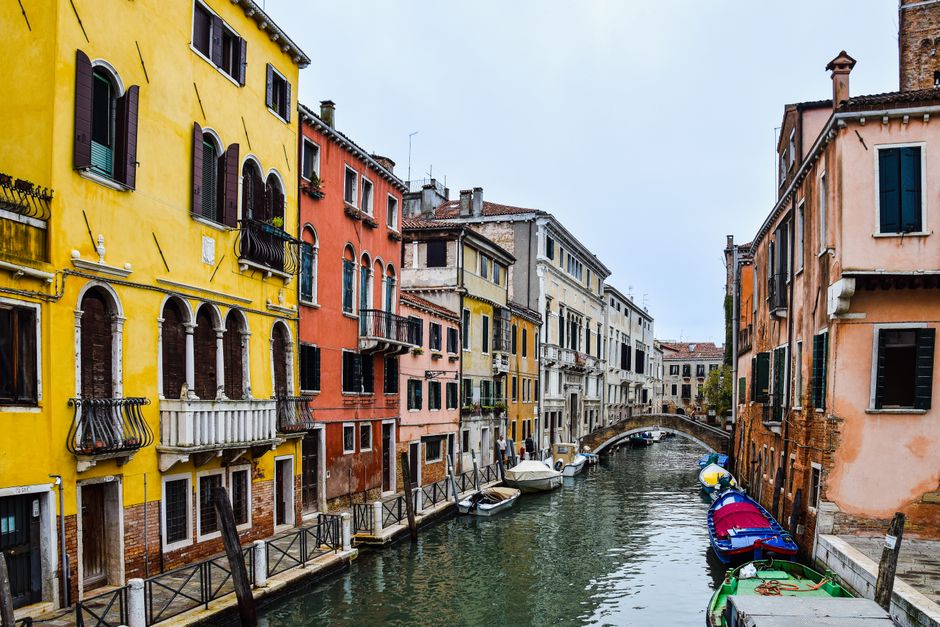
Venice sits in a lagoon in north-eastern Italy, spread across a cluster of small islands linked by bridges and separated by canals. There are no cars in the historic centre; you travel on foot or by boat. It is one of the most visited places in the world, and part of the art of enjoying it is stepping away from the busiest routes into the quieter districts. Here are eight things that give a rounded sense of the city.
1. St Mark's Square and the Basilica
The great public heart of Venice, framed by arcades and dominated by St Mark's Basilica with its domes and golden mosaics, and the tall Campanile bell tower beside it.
2. The Doge's Palace
The seat of the old Venetian republic's rulers, a grand Gothic palace beside the basilica, connected to the former prisons by the enclosed Bridge of Sighs.
3. The Grand Canal
The city's main waterway, curving through its centre and lined with historic palazzi. Riding the length of it on a public water-bus is one of the simplest pleasures Venice offers.
4. The Rialto Bridge and market
The most famous of the bridges across the Grand Canal, with the long-standing produce and fish markets nearby — a good place to see everyday Venetian life.
5. The lagoon islands
A short boat ride reaches Murano, long associated with glassmaking; Burano, known for its brightly painted houses and lacework; and Torcello, a quiet island with an ancient church and a strong sense of the lagoon's early history.
6. The quieter sestieri
Venice is divided into six districts, or sestieri. Wandering the calmer ones — such as Cannaregio or Dorsoduro — away from the main tourist arteries reveals canals, small squares and neighbourhood life that many visitors miss.
7. Art and churches
The city is rich in art, from the collections in its major galleries to the paintings still housed in the churches they were made for. Even a short list of Venice's museums and religious buildings could fill several days.
8. Getting out on the water
However you do it — a public vaporetto along the canals, a traghetto crossing the Grand Canal, or a traditional gondola — seeing Venice from the water is central to understanding it.
Getting around
There are no cars in the historic centre: walking and water transport are your only options, and both are part of the experience. Public water-buses, known as vaporetti, run set routes along the Grand Canal and out across the lagoon to the islands, so a single line can double as a sightseeing trip. Small ferries called traghetti cross the Grand Canal at a handful of points between the bridges, saving a long detour. The centre itself is compact, but its lanes twist, split and frequently dead-end at a canal, so allow plenty of time, carry a rough sense of direction, and expect to get pleasantly lost and backtrack more than once. Following signs to major landmarks such as the Rialto or St Mark's is often the easiest way to reorient yourself.
Good to know: Venice is extremely busy in peak season, and very high tides can occasionally flood low-lying areas such as St Mark's Square. Timetables, access arrangements and any local visitor rules change over time, so check current details before you travel.
Heading elsewhere in Italy or beyond? See our guide to Corsica and our Europe train travel tips, or browse all our destinations.