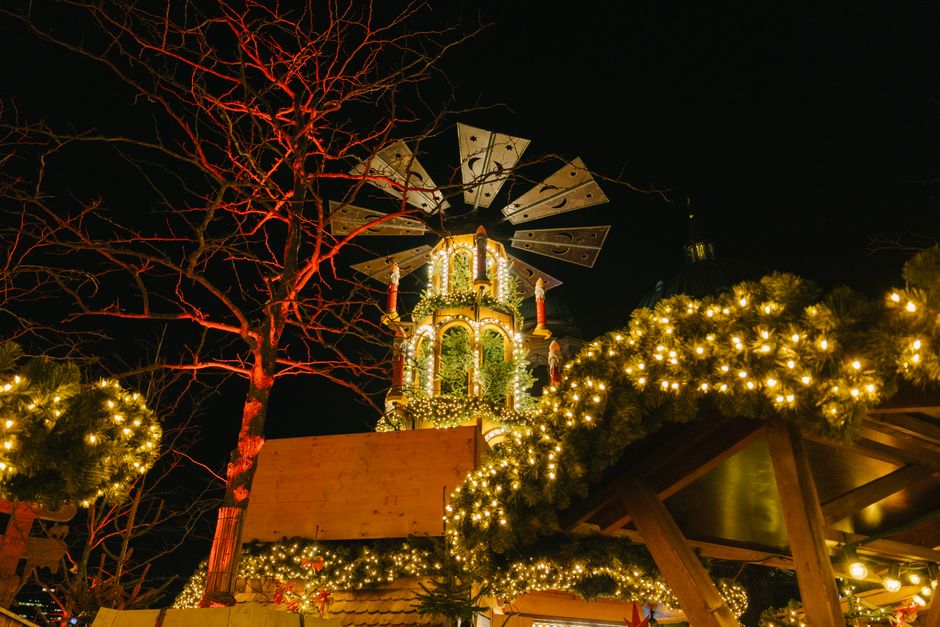
Across much of Europe, the weeks before Christmas bring open-air markets to town squares and cathedral forecourts. The tradition is strongest in the German-speaking countries, where it has centuries of history behind it, but it has spread widely across the continent. While every market has its own character, the ingredients are reassuringly familiar: rows of wooden chalets selling crafts and decorations, food stalls scenting the cold air, mugs of warm spiced wine, and a festive glow that comes into its own after dark. Part of the appeal is that these are genuinely local traditions rather than tourist inventions, with regional specialities and customs varying from one country to the next. These are among the cities most closely associated with the custom, and each is worth a visit in its own right.
Germany and Austria
Nuremberg, Germany
Home to one of the most famous markets of all, the Christkindlesmarkt, long established in the old town and known for its traditional stalls and gingerbread.
Dresden, Germany
Its Striezelmarkt is among the oldest documented Christmas markets in the country, famous for the local fruit-loaf associated with the season.
Cologne, Germany
Several markets across the city, including a much-photographed one in the shadow of the great cathedral.
Vienna, Austria
Grand markets set against imperial architecture, with the square before the city hall a particular focal point.
France and central Europe
Strasbourg, France
Often called one of the oldest Christmas markets in Europe, filling the Alsatian city's squares with a strongly Franco-German festive character.
Prague, Czech Republic
Atmospheric markets in the Old Town Square and beyond, set among the city's spires and historic buildings.
Budapest, Hungary
Markets in the central squares known for craft stalls and hearty seasonal food.
Tallinn, Estonia
A market in a beautifully preserved medieval town square, often deep in genuine northern winter.
What to expect
Markets typically run through the Advent weeks leading up to Christmas, though the exact opening period differs from city to city and from one year to the next. Expect crowds at weekends and in the evenings, especially in the best-known squares, and dress properly for cold weather — these are outdoor events, often held in the coldest, darkest part of the year. Beyond the shopping, much of the pleasure lies simply in wandering between the stalls, warming your hands around a hot drink, sampling regional food and soaking up the atmosphere as the lights come on. Many markets also feature carousels, choirs or nativity displays, and the larger cities often host several markets in different squares, each with its own flavour, so it's worth allowing time to see more than one.
Good to know: opening dates, closing dates and individual market arrangements change each year, and some markets move or pause. Always confirm this year's dates and any local rules before you travel.
Many travellers make a short trip built around two or three markets in nearby cities, which is easily done by rail: the German, Austrian and central European markets in particular sit within comfortable train journeys of one another, making a festive city-hopping route straightforward to plan. Travelling in the run-up to Christmas does mean cold weather and busy trains, so pack warm layers and book popular services ahead. See our Europe train travel tips and guide to choosing a rail pass, or for a winter base see our Munich budget guide. Browse all our destinations.