Corsica is a French territory in the Mediterranean, lying south-east of the mainland and just north of the Italian island of Sardinia. It is unusually mountainous for a Mediterranean island, with a spine of high peaks running through its centre, and that landscape shapes everything — the winding roads, the walking trails, the scattered coastal towns and the scented scrubland known locally as the maquis.
Attractions worth knowing about
Bonifacio
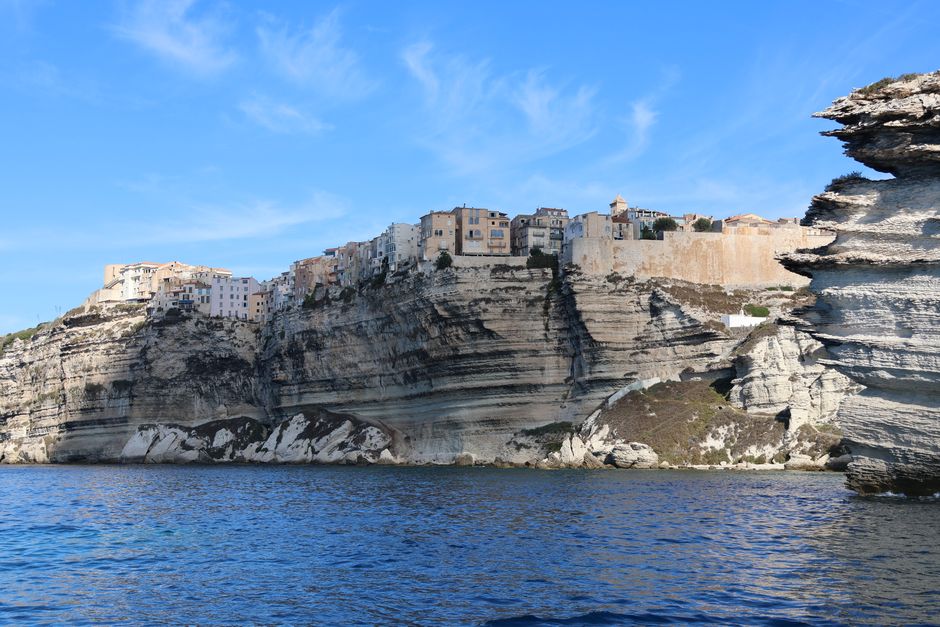
A striking town in the far south, its old quarter perched on white limestone cliffs above the sea. The clifftop citadel and the narrow streets of the haute ville are among the island's most recognisable sights.
Ajaccio
The island's largest town and administrative capital on the west coast, closely associated with Napoleon Bonaparte, who was born there. It makes a natural gateway with its harbour, old town and museums.
Bastia
The main town of the north, with a lively old port, a citadel quarter and a distinctly Italian-influenced character reflecting Corsica's long history.
Calvi
A north-western resort town beneath a prominent Genoese citadel, set on a wide bay backed by mountains.
Landscapes and the outdoors
Corsica is celebrated above all for its wild interior. The island is crossed by long-distance walking routes, the most famous being a demanding mountain trail that traverses it from north to south and draws experienced hikers from across Europe for its high passes and long ridges. Even without tackling the full route, the mountains offer countless day walks, deep gorges and cool river pools, and the interior villages give a very different flavour of the island from the busier coast.
- The Scandola Nature Reserve — a protected stretch of volcanic coastline in the north-west, recognised for its dramatic red cliffs, sea caves and marine life, and usually reached by boat.
- The Calanques de Piana — extraordinary weathered red-rock formations tumbling towards the sea on the west coast, particularly striking in the low light of early morning or evening.
- Cap Corse — the long finger of land pointing north from near Bastia, ringed by a scenic coastal road, small fishing villages and the old Genoese watchtowers that dot the island's shores.
- The beaches of the east and south — long, sandy stretches that contrast with the rockier, cove-studded coastline of the west.
Getting around
Corsica's mountainous terrain means journeys take longer than the map suggests, with roads that wind and climb rather than run straight. Many travellers hire a car to reach the smaller towns and trailheads, since public transport thins out away from the main centres. A narrow-gauge railway links some of the principal towns and is a scenic experience in its own right, threading through the interior and over viaducts as it climbs into the hills. Ferries connect the island's ports with the French mainland and with nearby Italy, and there are airports serving the larger towns for those coming from further afield.
Good to know: the island is busiest and hottest in high summer, while spring and early autumn are gentler for walking. Transport schedules, ferry routes and reserve access can change seasonally, so check current details before you travel.
Planning wider Mediterranean travel? See our round-up of Europe's best beaches and our guide to Venice, or browse all our destinations.