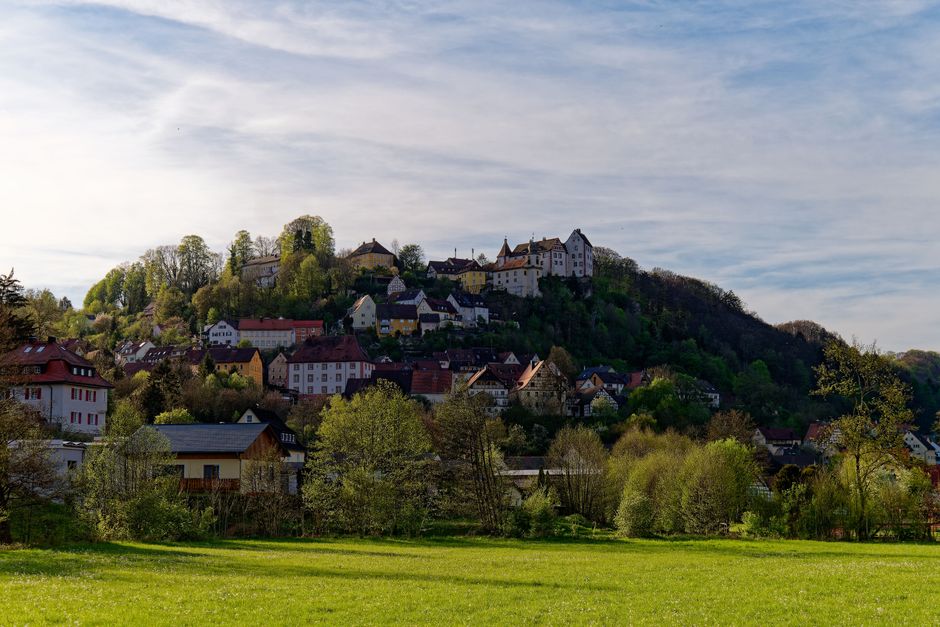
Few things capture Europe's long history quite like its castles and palaces. Some were built for defence, thrown up on crags and river bends to command the land around them; others were raised for royal display, all grand halls and formal gardens. Many evolved over centuries from grim medieval strongholds into elegant residences as the need for walls gave way to a taste for comfort and show. Together they trace the story of the continent, from feuding lords to imperial courts. Rather than impose a strict ranking — reputations and favourites differ from traveller to traveller — here is a broad selection of the most famous and most rewarding, grouped by region so you can pick out those near your route.
Central Europe
Neuschwanstein, Germany
The romantic hilltop castle in Bavaria that inspired the storybook image of a castle for many people, built in the 19th century for King Ludwig II.
Prague Castle, Czech Republic
One of the largest castle complexes in the world, dominating the city skyline and enclosing a cathedral, palaces and gardens.
Hohensalzburg, Austria
A vast, well-preserved medieval fortress towering above Salzburg.
Schönbrunn, Vienna
The grand former imperial summer palace, famous for its baroque state rooms and formal gardens.
Western Europe
The Loire châteaux, France
A whole valley of Renaissance castles, with Chambord and Chenonceau among the most famous.
Versailles, France
The immense royal palace outside Paris, a byword for courtly grandeur and its Hall of Mirrors.
The Tower of London, England
A historic riverside fortress that has served as royal residence, prison and treasury, home to the Crown Jewels.
Edinburgh Castle, Scotland
Perched on a volcanic crag above the Scottish capital, one of Britain's most recognisable fortresses.
Iberia, Italy and beyond
The Alhambra, Spain
A palace and fortress complex in Granada, celebrated for its exquisite Moorish architecture and gardens.
Pena Palace, Portugal
A vividly coloured, romantic palace on a wooded hilltop above Sintra.
Castel Sant'Angelo, Rome
A cylindrical riverside fortress with roots as an ancient mausoleum, later a papal stronghold.
Bran Castle, Romania
A dramatic Transylvanian hilltop castle popularly linked with vampire legend.
Malbork, Poland
An enormous medieval brick fortress built by the Teutonic Knights, and one of the largest castles in the world by land area.
Windsor Castle, England
One of the oldest continuously inhabited castles anywhere, a working royal residence with state apartments and a long history stretching back to the Norman period.
Good to know
Many of these are working museums or still-used residences, and visitor arrangements vary widely from one to the next. Some sit on remote hilltops or involve a stiff climb to reach the gate, so comfortable footwear helps. The most famous can be extremely busy in summer, and timed entry or advance booking is increasingly common, which can mean queues for anyone who simply turns up. Interiors, gardens and towers may be open or closed on different days, and some sites limit numbers to protect delicate rooms. Because opening arrangements, ticketing and access all change over time — and some castles close parts for restoration — it's always worth checking current details before you travel and, where you can, seeing the most popular sites early or late in the day.
Reaching them is often easiest by rail — see our train travel tips and rail pass guide, or browse all our destinations.