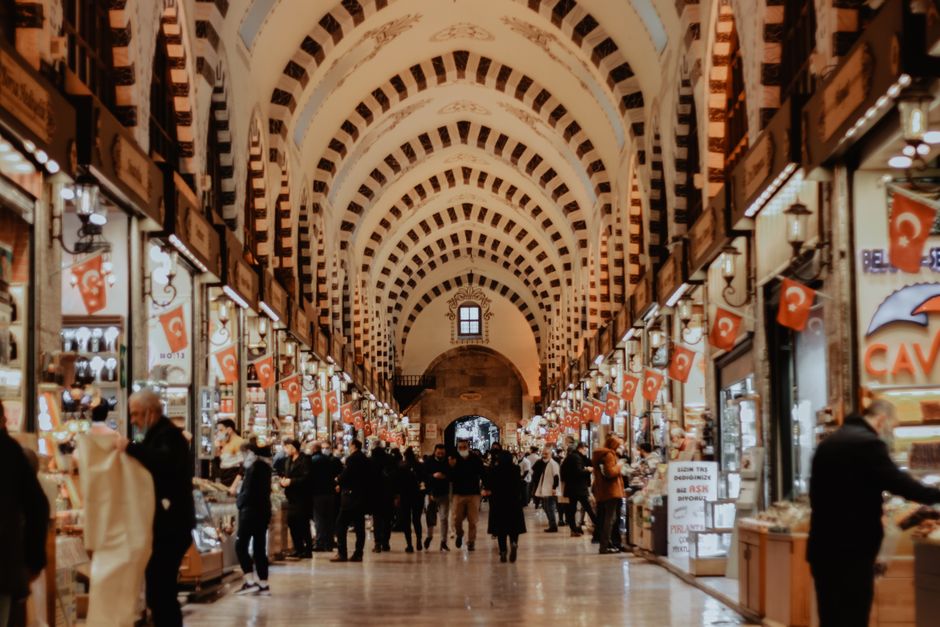
Set in the historic heart of Istanbul, the Kapalıçarşı has been trading since the 15th century, when it grew up under the Ottoman sultans. Today it spreads across dozens of covered streets and thousands of shops, drawing enormous numbers of visitors. Going in with a rough plan turns what can feel overwhelming into one of the highlights of any trip to the city.
What you'll find inside
Gold and jewellery
Whole lanes glitter with gold, silver and precious stones. This is traditionally one of the bazaar's core trades, and the window displays alone are worth the walk.
Carpets and kilims
Turkish and regional rugs are a classic bazaar purchase. Sellers will happily unroll piece after piece; browsing is expected even if you are only looking.
Ceramics and textiles
Hand-painted İznik-style tiles, lamps, scarves and leather goods fill much of the market — good for smaller, packable souvenirs.
Spices and sweets
The nearby Spice Bazaar complements the Grand Bazaar with mounds of spices, teas and Turkish delight — an easy add-on to the same outing.
A short history under one roof
The bazaar began soon after the Ottoman conquest of the city, growing outward from two stone-built halls, the Cevahir Bedesten and the Sandal Bedesten, which still stand at its core and traditionally held the most valuable goods. Over the centuries it expanded into the sprawling network of vaulted lanes you see today, organised — as many old markets were — by trade, so that jewellers, leather-sellers and carpet dealers each had their own quarter. That guild logic still shapes the layout, which is why you will pass a run of near-identical shops and then turn a corner into an entirely different craft. Understanding this makes the maze feel less random and more like a living record of how commerce was once arranged.
The building has survived fires and earthquakes and been rebuilt more than once, yet it has never stopped trading. That continuity is part of the appeal: you are walking through a marketplace that has functioned, more or less, for well over five hundred years.
Haggling and etiquette
- Bargaining is part of the culture. In many shops, especially for carpets, textiles and jewellery, the first price is a starting point, not a fixed figure. Stay friendly and unhurried.
- Accept the tea. Being offered tea is hospitality, not obligation. You can enjoy it and still walk away.
- Know roughly what things cost elsewhere. A little research beforehand helps you judge a fair price and shop with confidence.
- Mind your belongings. As in any crowded market, keep bags zipped and valuables close.
The bazaar keeps traditional trading hours and closes on certain days and holidays; the exact pattern changes through the year. Check current details before you travel so a closed-market morning doesn't derail your plans.
Getting around
The Grand Bazaar sits in the Fatih district, within easy reach of Istanbul's other great sights — the trams that serve the old city stop close by, and the Blue Mosque, Hagia Sophia and Topkapı Palace are all within walking distance. Inside, the market is a deliberate maze; rather than fighting it, note a landmark gate or two and allow yourself to wander. If you lose your bearings, the numbered gates and main cross-streets help you re-orient. Comfortable shoes and a modest amount of cash for small purchases make the visit smoother.
Istanbul bridges Europe and Asia and rewards a longer stay. For nearby ideas see our piece on northern and southern Cyprus, weigh the city as one of Europe's best weekend breaks, or return to the destinations hub for more.