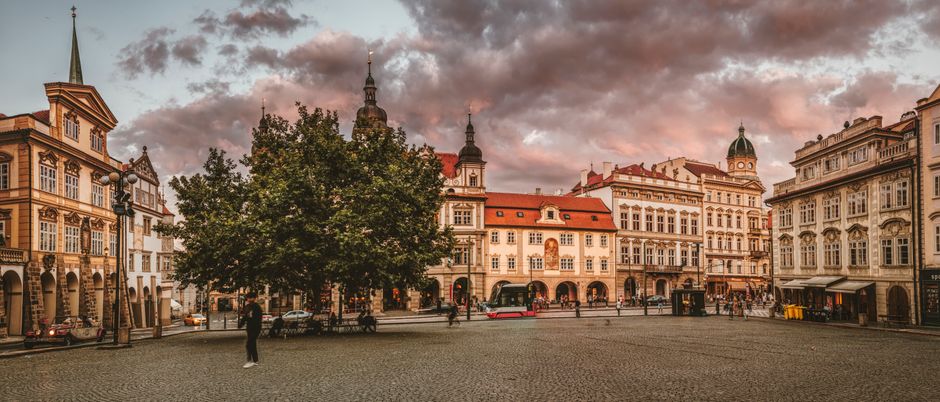
A good short break lives or dies on how quickly you can start enjoying it. The cities below share the qualities that matter for two or three days: a manageable centre, good transport from the airport or station, and enough character that you leave wanting to return rather than feeling you have ticked it off. Consider this a starting shortlist rather than a ranking.
Classic city breaks
Amsterdam
Canals, world-class museums and a centre made for walking or cycling. Easy to reach and easy to love in a weekend. See our fuller guide to things to do in Amsterdam.
Prague
A fairy-tale old town, a hilltop castle and the Charles Bridge, all wonderfully compact. Affordable and atmospheric in almost any season.
Lisbon
Hills, trams, tiles and river light. Warm for much of the year and full of viewpoints, it rewards even a short, unhurried visit.
Vienna
Imperial grandeur, coffee-house culture and grand museums, arranged around an elegant, walkable centre.
Characterful alternatives
- Munich. Grand squares, great museums and beer-garden evenings — see our twenty-four hours in Munich for a ready-made one-day plan.
- Kraków. One of Europe's most complete medieval centres, still gentle on the budget and full of history.
- Porto. A river city of tiled façades and port-wine lodges, small enough to see well in a couple of days.
- Bologna. Italy's food capital, arcaded and unhurried — our guide to Bologna has the detail.
- Copenhagen. Design, harbourside walks and a famously liveable feel, easily covered on foot or by bike.
What makes a city work for two days
The best weekend cities share a few practical qualities worth looking for when you plan your own shortlist. A compact, walkable historic core means you spend your limited time enjoying the place rather than commuting across it. Good, quick transport from the airport or main station — ideally a direct train or metro — saves the frustrating hours that can swallow the first and last afternoons of a short trip. A concentration of sights, cafés and green space within a small radius lets you improvise rather than plan every hour. And a strong food-and-café culture matters more than it might sound: on a short break, a long lunch in a good square is often the memory you take home, not the museum you queued for. Judge a candidate city against these, and you will rarely be disappointed.
It also helps to be honest about pace. Two days is not enough to "do" a capital, and treating it as a race guarantees exhaustion. Pick two or three anchors — a museum, a neighbourhood, a viewpoint — and let the rest of the time be unstructured. The cities above all reward that lighter touch.
How to choose
Match the city to the season and to what you actually want. Northern cities are magical around their Christmas markets but short on daylight; southern ones stretch the outdoor café season far longer. If you are flying, factor in how long it takes to reach the centre from the airport — some are twenty minutes away, others closer to an hour. And resist over-planning: the best weekends leave room to sit in a square and watch a city go about its business.
Flight schedules, city taxes and museum arrangements change with the season, and popular sights increasingly use timed entry. Check current details before you travel and book the headline attractions ahead.
Good to know
For the shortest breaks, pack light enough to skip checked luggage and stay central so you spend time in the city rather than commuting into it. Many of these places connect beautifully by train if you want to string two together — our guide to exploring Europe by rail explains how — and every city here appears among the wider ideas on the destinations hub.