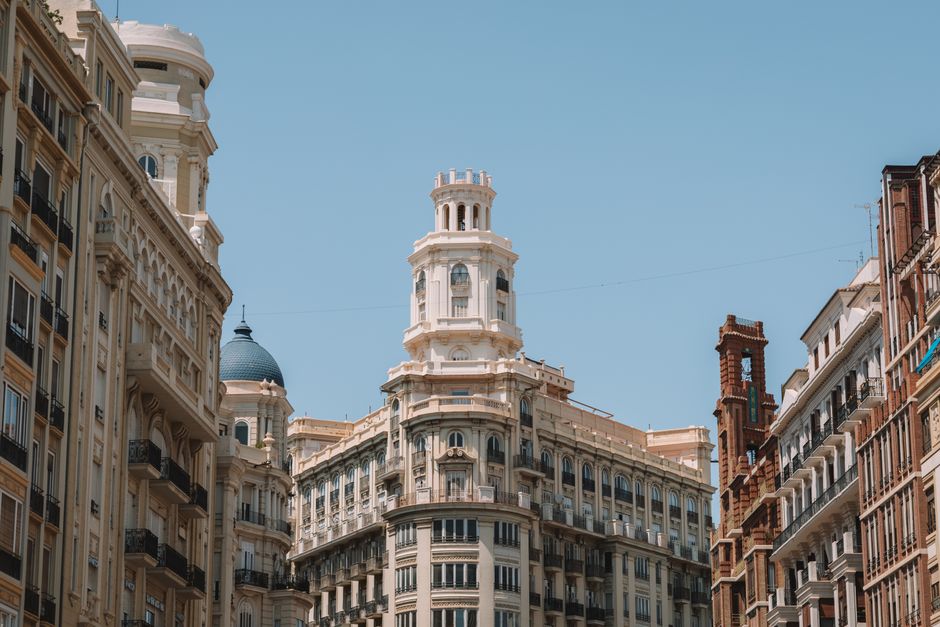
Valencia, on Spain's eastern Mediterranean coast, is often overlooked in favour of Madrid and Barcelona — which is part of its charm and part of its value. It offers a walkable old town, some of the boldest contemporary architecture in the country, a huge riverbed turned into parkland, and a food culture that gave the world paella. It is also generally more relaxed and better value than Spain's two biggest cities, which makes it an easy place to enjoy at your own pace.
Five things to do
1. The City of Arts and Sciences
Valencia's signature sight: a complex of futuristic white structures designed largely by the architect Santiago Calatrava, together with Félix Candela, housing a science museum, an oceanarium, a planetarium and an opera house. Even without going inside, the sculptural buildings and their reflecting pools are worth the visit, especially in the changing light of early evening.
2. Wander the old town
The historic centre rewards aimless walking, with its cathedral, the bell tower known as the Miguelete, medieval city gates and a scatter of lively squares. Climbing the tower is a traditional way to get your bearings over the tiled rooftops, and the surrounding lanes are full of small cafés and shops.
3. The Turia Gardens
After the river was diverted following serious historic floods, its old bed was turned into a long, green park that curls right through the city. Today it is a favourite spot for walking, cycling, jogging and picnicking, and it conveniently links to the City of Arts and Sciences at its seaward end.
4. The Central Market
One of the largest fresh-produce markets in Europe, housed in a handsome early-20th-century building of iron, glass and tilework. It is a genuine working market rather than a tourist set-piece, which makes it a fine place to get a feel for local ingredients and everyday Valencian life.
5. Try paella at its source
Valencia is the birthplace of paella, and the traditional local version is quite specific about its ingredients — it is not the seafood mix many visitors expect. Eating it here, ideally at lunch, which is the customary time, is as much a cultural experience as a meal.
Beyond the highlights
If you have longer, Valencia rewards a slower look. The Barrio del Carmen, the oldest part of the old town, is full of narrow lanes, street art and small bars, and comes into its own in the evening. The city's long beaches sit a short tram ride from the centre, backed by seafood restaurants that fill up at weekends. Just outside the city lies the Albufera, a large freshwater lagoon and rice-growing area — the very landscape that gave rise to paella — where flat-bottomed boats drift among the reeds. None of this needs to be rushed, which is rather the point of Valencia.
Getting around
The centre is compact and best explored on foot, with a metro and tram network reaching the beach and the outer districts, plus a notably cycle-friendly layout thanks to the flat Turia park running through the middle. Valencia connects to the rest of Spain by high-speed and intercity rail; see our rail overview. Details such as transport passes and timetables change, so check current information before you travel.